
Ground Investigation
Expert Ground Solutions - Proven Results
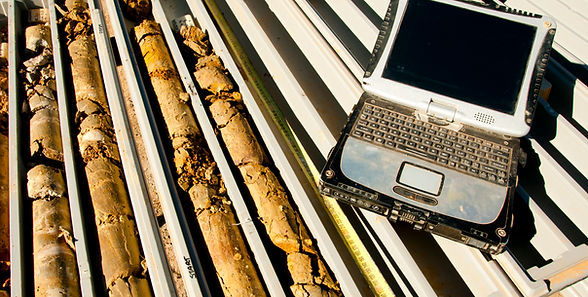
A ground investigation will generally aim to confirm / clarify information, which has previously been identified, usually from a Phase I Desk Study assessment. A good ground Investigation will be targeted to help gather sufficient information which can help clients to better understand and assess their project risks.
How can PT Ground Solutions support your project?
Ground investigation is a challenging and diverse industry and PT Ground Solutions can assist our clients through the process, from initial ground investigation design through to implementation and compliance all in accordance with relevant industry standards. PT Ground Solutions have highly skilled professionals with extensive industry experience, often utilising innovative equipment to gather reliable information. Below are some examples of the types of ground investigation techniques, which may be utilised for your projects. PT Ground Solutions are not constrained with in-house drilling rigs and have unlimited access to any ground investigation option, with a strong supply chain across the UK.
_JPEG.jpeg)
Rotary Drilling
Shallow and deep drilling of boreholes to recover soil samples and rock cores. Used for geotechnical and environmental assessments as well as probing the ground to assess for voids, such as coal mine workings. Groundwater monitoring wells and geotechnical instrumentation can be installed to allow for post-field work monitoring and assessments.

Cable Percussion Drilling
Shallow and deep drilling for the recover of soil samples or weak / weathered rock. Also used for geotechnical and environmental investigations, this technique allows for insitu testing, e.g. Standard Penetration Testing (SPT) and / or the recover of high quality undisturbed and disturbed samples. Permenant groundwater or geotechnical instrumentation can also be installed.
.jpg)
Windowless Sampling
Windowless Sampling is a small compact dynamic sampling technique, ideal for shallow soil investigations (usually max 6.0m depth) and for sites where access is restricted. The rigs are usually tracked and are capable of recovering soil samples for geotechnical and environmental assessments. Depending on access and other site restrictions, multiple holes can usually be completed in a day and with the option of installing shallow monitoring wells or geotechnical instrumentation, it makes it one of the more cost effective ground investigation techniques.

Trial Pits or Hand Pits
Exploratory holes can be excavated using a mechanical excavator or by hand, often referred to as trial pits. This option allows for a visual assessment of the pits and for the recover of soil samples for geotechnical or environmental testing. In situ testing can also be carried out in a trial pit such as soakaway testing or hand shear vane tests. Depending on access, multiple trial pits can be completed in a day, which can also make it a cost effective solution.
Cone Penetration Testing
Cone Penetration Testing (CPT) is a rapid, investigation method where a probe with a cone on the end is pushed into the ground to measure soil properties like cone resistance, sleeve friction, and pore water pressure. This provides a continuous soil profile and soil parameters can be derived to support geotechnical assessments.

.jpg)
Vacuum excavation is a non invasive safe digging technique used to advance holes safely around services. It utilises either an air or water pressure lance to loosen the soil and then a large vacuum suction unit is used to remove the material from the hole.
Vacuum Excavation
Contact
We would be delighted to discuss your ground investigation requirements. Get in touch to see how we can help.